PRIVATE PARAMEDICAL PRACTICE
Confidential enquiries
READING · LONGEVITY
Home / Resources & Guides / How Long Does an Areola Tattoo Last?
How long does an areola tattoo last? What fades, what holds, and what changes the answer.
Paramedical pigment is placed lightly, in layers, in the upper skin. That choice — together with your skin, the light it lives in and the tissue underneath — decides how long the colour keeps reading the way it did once it healed. No studio can give you a date.
ON THIS PLATE
01 Why a fixed number would mislead
02 Five variables that move the answer
03 Conservative depth, and its trade-off
04 What people notice over time
05 When a refresh is considered
PIGMENT
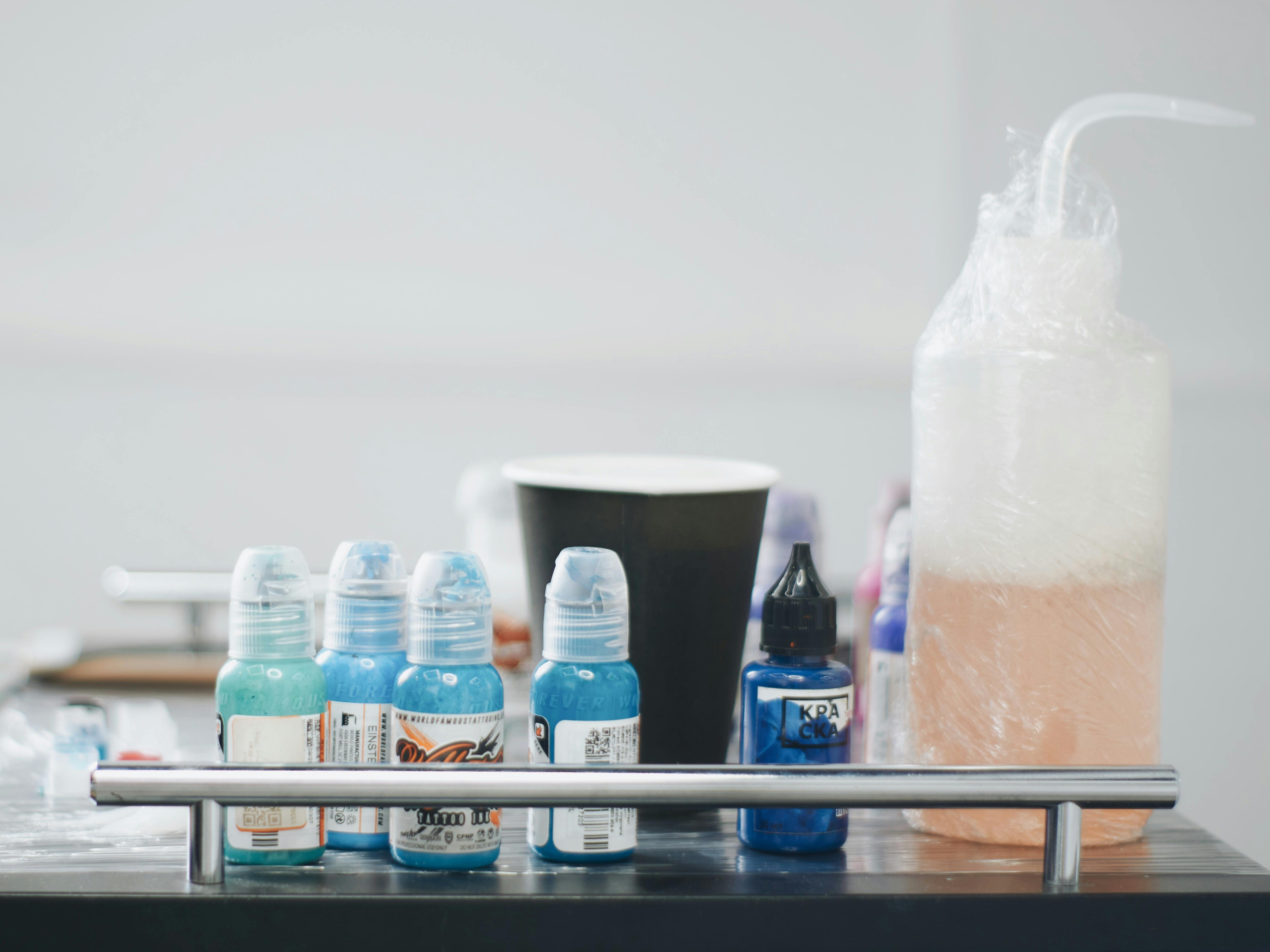
Reference photograph: pigments set out before a session. How much of a bottle ends up in the skin — and how deeply — is the single largest thing a practitioner controls about longevity.
WHY NO SINGLE NUMBER
Pigment is designed to soften, and it softens at your pace.
Cosmetic and paramedical pigment sits in the upper layers of the skin, where the body gradually breaks particles down and carries them away, and where daylight keeps working on them from the other side. The process is slow, continuous and personal. Two people tattooed on the same afternoon, with the same pigments and the same hand, can look quite different from one another years later — because skin, sun, surgery and time are not standard inputs.
What can be described honestly is the direction of travel. Colour settles, then softens, then eventually reads lighter than it did at the review appointment. When that becomes noticeable enough for you to want something done about it is the only timing that really counts, and it is not a date anyone can set in advance.
What can be described honestly is the direction of travel. Colour settles, then softens, then eventually reads lighter than it did at the review appointment. When that becomes noticeable enough for you to want something done about it is the only timing that really counts, and it is not a date anyone can set in advance.
VARIABLES
Five things that change how long healed colour keeps its strength.
01
Skin type and turnover
Skin that renews quickly tends to release pigment sooner. Thickness, oiliness and natural tone all affect how much contrast remains between the tattooed area and the skin beside it as the colour settles.
02
Sun and ultraviolet light
UV breaks pigment down. Skin that stays covered holds colour longer than skin exposed regularly, which is why sun care over healed work is discussed at the review rather than left as an afterthought.
03
Scar tissue and reconstructed skin
Surgically altered tissue takes and holds pigment less predictably than untouched skin. It can absorb unevenly and release faster in places — one reason a second session is planned into the work rather than hoped for. This is covered further in Areola Tattoo After Reconstruction.
04
Shade and density of pigment
The soft, warm tones that look most natural on areola work are inherently more delicate than dense dark ink. The shades chosen for realism are usually the shades that soften first — a known consequence of choosing them.
05
How your body handles pigment
General health, medication and immune response all influence how quickly particles are cleared. None of it can be measured beforehand, which is precisely why longevity is talked about in ranges and tendencies rather than figures.
DECORATIVE TATTOOING
Built to stay
Pigment is placed deeper and more densely, in high-contrast inks selected to hold their edge for decades. Permanence is the point: the design is meant to remain visible as a design, and a certain amount of spread or darkening over time is accepted as part of it.
PARAMEDICAL AREOLA WORK
Built to disappear
Colour is built in light layers, at a shallower depth, in tones matched to the skin around it. The aim is for the work to read as skin rather than as a tattoo — which means less pigment held in the skin, and often an earlier softening. It is a deliberate trade: a result that looks natural now and can be revisited, instead of a heavier result that holds longer and reads as ink. The technique itself is described on Areola Tattooing.
OVER TIME
What people tend to notice, and in what order.
Through the healing weeks. Colour looks strongest straight after the appointment and lifts noticeably as the surface settles. What you see once healing is complete is far closer to the true result than anything visible on the day. The stages are set out in Areola Tattoo Healing.
Through the settled period that follows. Most of the early change happens as the skin finishes its cycle. Tone may sit softer than expected and edges may look less defined than they did at first — which is usually why a second session is scheduled, rather than a sign that anything has gone wrong.
Later on. Colour generally continues to lighten rather than change character. Warm tones can cool slightly; a shade may read paler in bright daylight before you notice it in the mirror at home. Nothing about that requires action. A refresh is considered when you want one, not on a schedule handed to you.
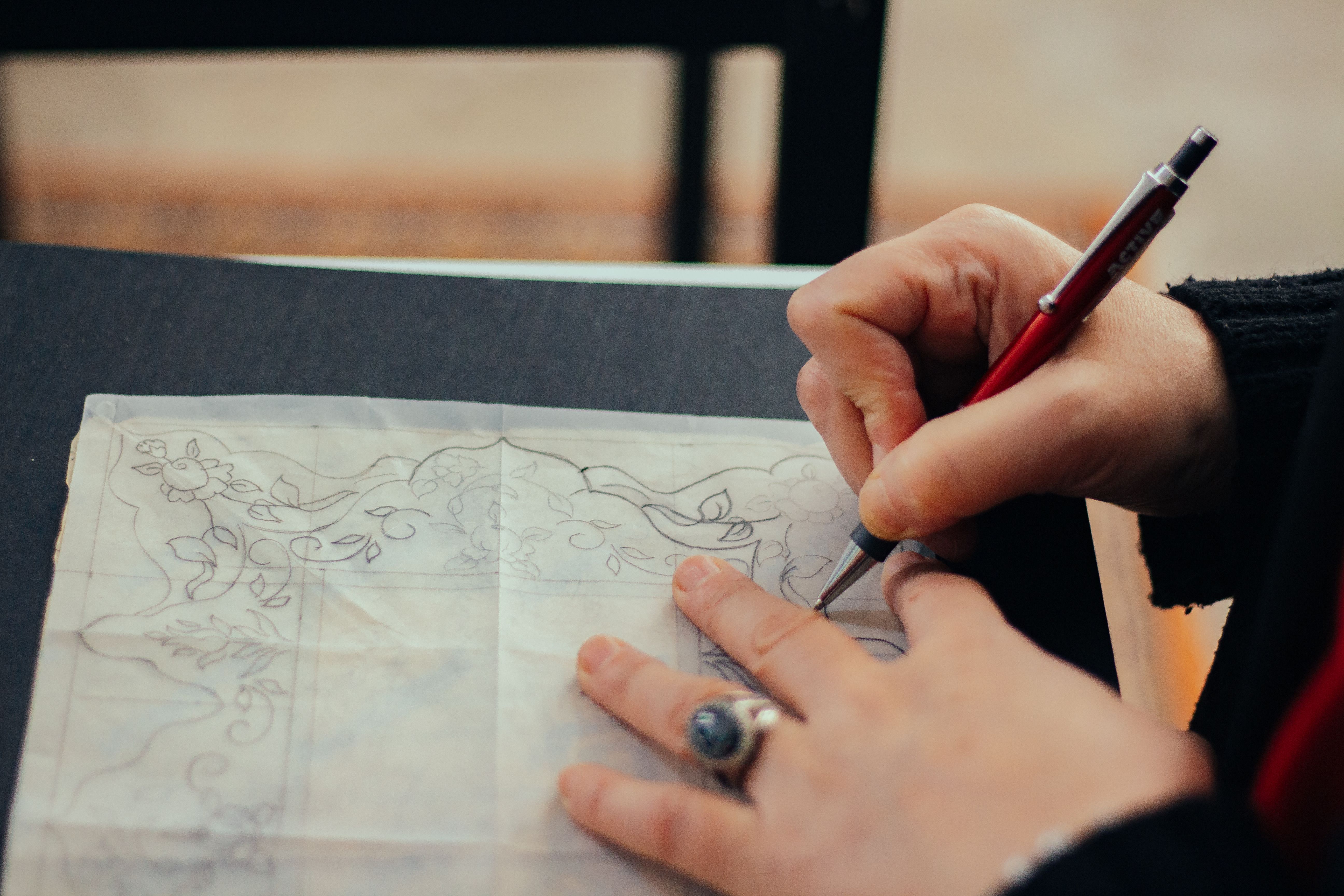
Reference photograph: a drawing worked back over rather than started again. A refresh follows the same logic — the existing design is re-read first, and pigment is rebuilt only where it has thinned.
WHEN A REFRESH IS CONSIDERED
Softer than you would like is reason enough.
A refresh revisits work that has faded evenly: the same design, re-read in current light, with pigment rebuilt where it has thinned. It begins the way any appointment does — looking at the skin as it is now, not as it was on the day it was tattooed. Areola Tattoo Refresh describes what that appointment involves, and When to Consider an Areola Tattoo Refresh covers the signs people tend to notice first.
Where colour has not simply faded but drifted — reading too warm, too grey or uneven between sides — that is a different problem with a different approach, set out on Areola Colour Correction. Deciding which of the two applies is an assessment, not a guess made from a photograph alone.
Where colour has not simply faded but drifted — reading too warm, too grey or uneven between sides — that is a different problem with a different approach, set out on Areola Colour Correction. Deciding which of the two applies is an assessment, not a guess made from a photograph alone.
PRIVATE CONSULTATION
Questions about fading are easier to answer when the skin in question can actually be seen.
Whether you are weighing up a first appointment or wondering if work done some years ago is due for attention, a consultation is the point where general guidance becomes specific to you. Enquiries are read privately by the studio.