PLATE I
Pencil, ruler and tracing paper — the measuring stage of restorative and paramedical tattooing.
PLATE II
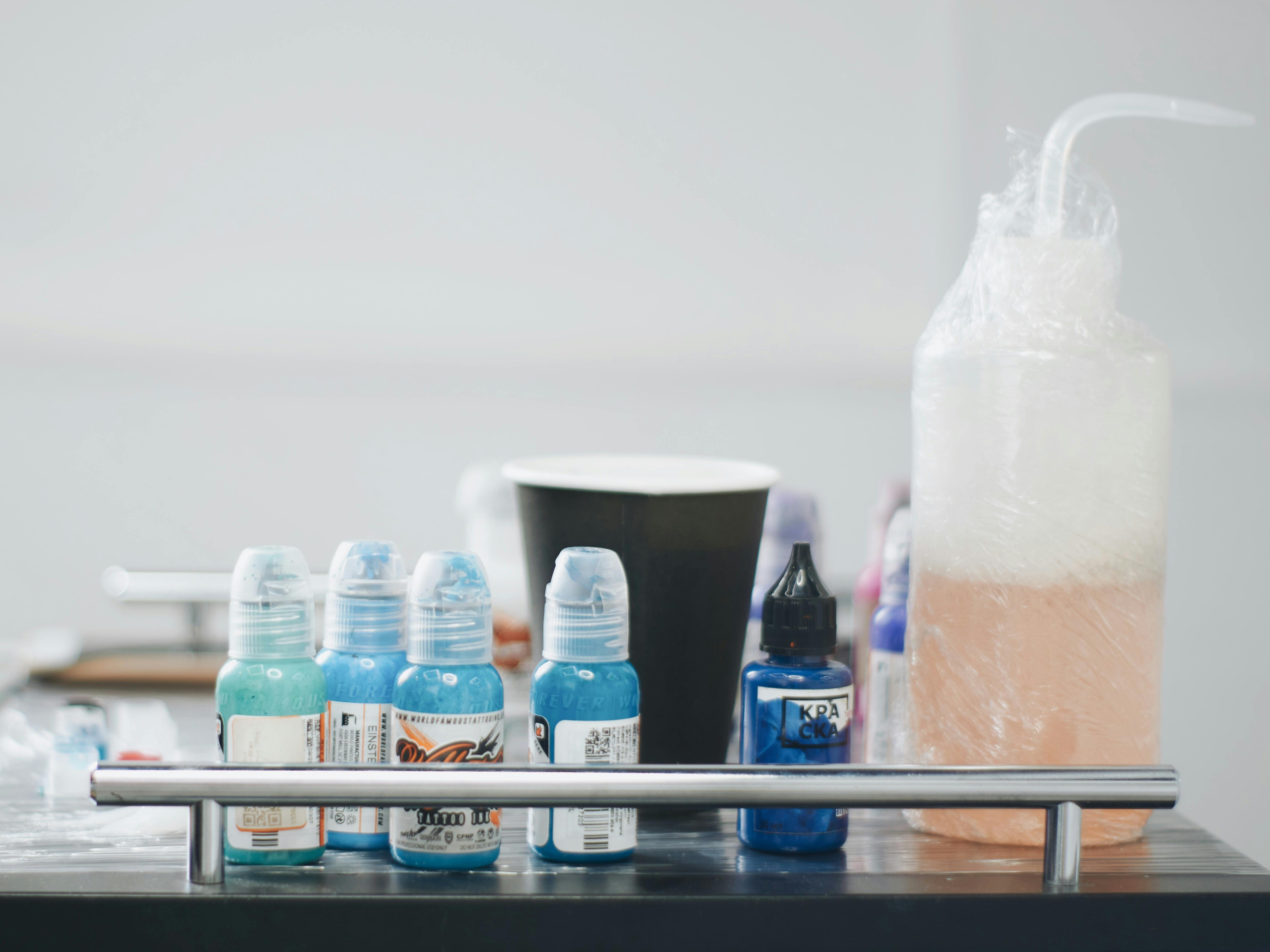
Pigment bottles and a single-use cup, laid out before anything begins. Tone is mixed and compared in small amounts, and placement is measured and checked first — the part of the work that takes the longest and shows the least.
DISCIPLINE
A decorative tattoo is designed to be seen. This work is designed to be unremarkable — to sit quietly with the skin around it, in a tone that reads as ordinary rather than applied. That changes almost every decision: how colour is mixed, how an edge is softened, how much is done in one sitting and how much is left until healing has had its say.
Areola Tattoo Studio works only in this register: areola tattooing, 3D nipple restoration and paramedical tattooing, including scar camouflage. Skin that has been operated on, grafted or scarred behaves differently from untouched skin, and it will take pigment differently again. We explain what we are looking at, what we would try, and where the honest limits sit. We don’t predict outcomes, and we don’t diagnose.
People who have had a mastectomy, with or without reconstruction, and are considering how the area might look afterwards.
People with existing areola tattoo work that has softened, shifted in tone or no longer sits evenly on both sides.
People living with scarring — in the areola area or elsewhere on the body — who want to understand what camouflage tattooing can and cannot address.
This page is educational. Whether any treatment is suitable for you is only ever decided in person, with you, and in your own time.
PLATE IV
IV
Plate four: the register of stages, in the order they happen.
A private conversation first: what has happened to the area, what you would like it to look like, and what tattooing can and cannot address. Nothing has to be booked at that meeting. You leave with information rather than pressure, and time to think it over.
Placement is drawn on the skin with a skin-safe marker and checked against measurements while you are sitting and standing, because the two rarely agree. Size, spacing and the edge of the shape are settled with you before any pigment is opened.
Pigment is worked in by hand in thin, built-up passes so tone can be judged as it develops rather than committed to at the start. We work at your pace and stop whenever you ask. How much one session covers depends on the area and how your skin responds.
Colour usually looks darker and sharper at first and softens as the skin recovers, which is why nothing is judged on the day. You are given written aftercare for your own situation, and we would much rather you ask a small question early than wait.
Once healing has settled we look at the area together in daylight and talk plainly about tone, symmetry and how the edge is reading. If an adjustment would help, that is discussed then — it is never assumed in advance. See how each service is structured.
TREATMENTS
Each has its own page covering overview, who it may suit, consultation, preparation, treatment, healing and questions.
The studio’s core treatment: tone, shape and placement designed with you, then tattooed by hand in stages.
Light and shadow shaded onto flat skin to suggest dimension, rather than adding anything to the surface.
For skin where the nipple or areola has been removed or altered, rebuilding appearance with pigment alone.
Timing, skin condition and readiness are talked through carefully before any tattooing is planned after mastectomy.
How reconstructed tissue and surgical scars change the way colour is placed and the shape is drawn.
Assessment of existing pigment that has shifted warm, cool or uneven, and what correction may involve.
Softening how scarring within and around the areola area reads, separately from full restoration work.
For earlier work that has softened with time — what a refresh appointment looks at and involves.
The wider restorative discipline this studio practises, of which areola work is one part.
Camouflage tattooing for scars elsewhere on the body, including patch testing and suitability discussion.
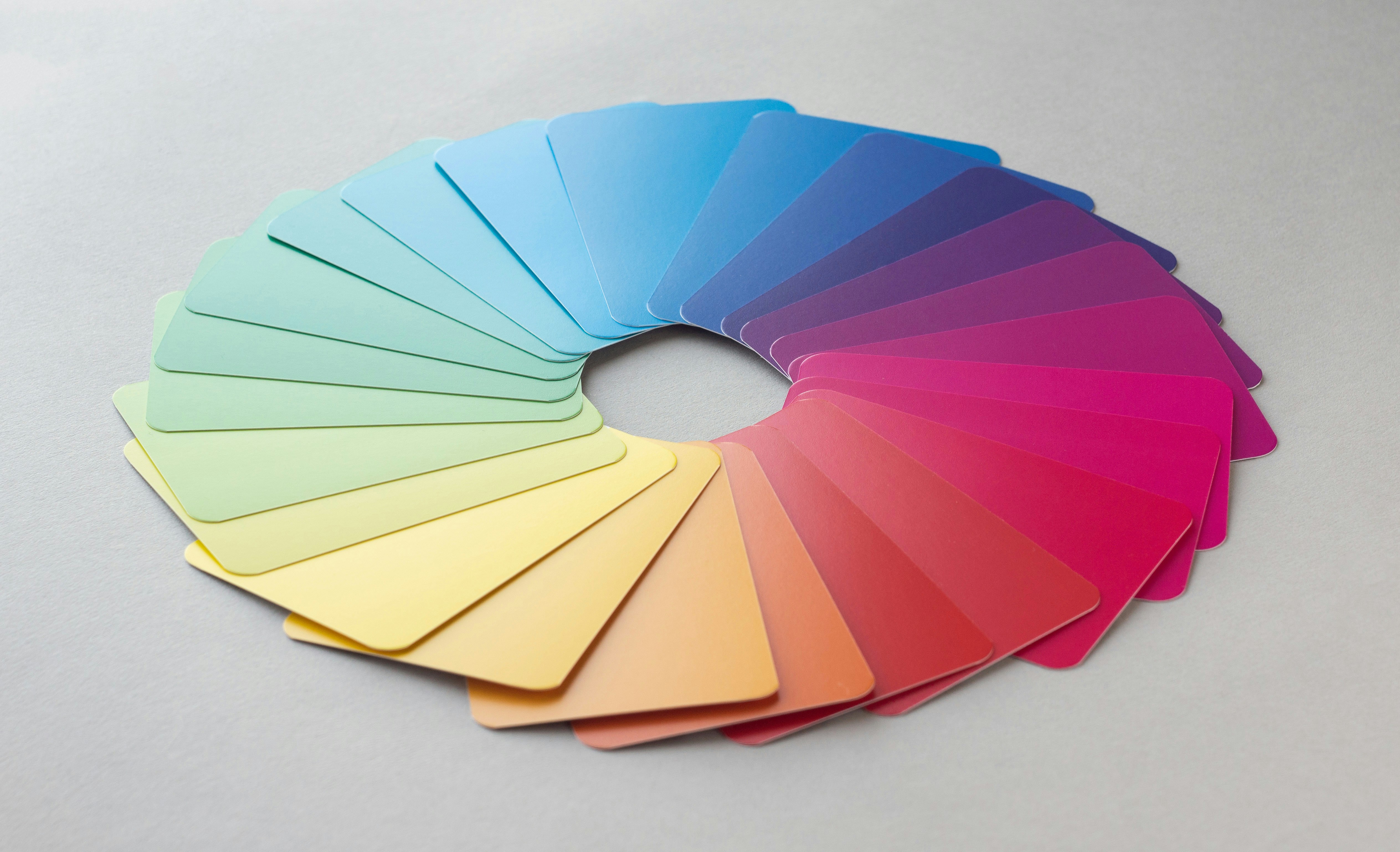
Colour swatches on white — a reference image for how tone is compared side by side in even daylight before anything is chosen.
PLATE VI
Tone is compared against your own skin in natural light rather than picked from a chart, and it is usually a mix rather than a single colour. Warmth, depth and how much contrast you want with the surrounding skin are all your call — some people want the area to disappear entirely, others want it clearly defined.
Shape is drawn the same way. Symmetry on paper and symmetry on a body are different problems, particularly where reconstruction, grafting or scarring has changed the surface. We draw, look, wipe it off and draw again until you recognise it.
Skin heals in its own way, so we describe what we are aiming for and what may need revisiting — never a guaranteed result. Read more on colour selection or about how the studio works.
METHOD
The most useful thing we can tell you about the work is how it is carried out. Every appointment starts with measurement: placement drawn on the skin with a skin-safe marker, checked while you are seated and again standing, and compared against the other side before anything is agreed.
Tone is mixed rather than picked. Small amounts are compared against your own skin in daylight, adjusted, and compared again, because undertone matters more than the colour a chart suggests. Pigment is then applied in thin, built-up passes, often across staged appointments — skin that has been operated on, grafted or scarred takes colour at its own rate, and an under-worked area can be added to where an over-worked one cannot.
What the studio will not do is predict your result. We explain what we are aiming for, where the honest limits sit, and what may be worth revisiting once healing has settled.
PLATE VII
Any image published here will carry written consent from the person it belongs to, and will be labelled with the treatment it relates to. Nothing is staged, borrowed or illustrated. Because the imagery is sensitive, it is presented quietly, cropped closely and kept apart from the rest of the site.
Examples relevant to your own situation are looked at privately at consultation rather than browsed online. Results differ between people, and two sets of skin given the same work will not heal the same way.

Gloved hands and a prepared instrument tray — the quiet, clinical set-up that sits behind sensitive work.
General information only, written to help you prepare. Anything specific to you is answered in person. Full FAQ.
We look at the area, talk about what you would like, and go through what the treatment involves, what it cannot change, and what healing generally asks of you. You are not asked to decide anything on the day.
Consultations and appointments are one-to-one and unhurried. Enquiries, photographs and notes are handled confidentially, and nothing is ever published without your written permission.
We can show you the design on your skin and explain what we are working towards, but we do not promise outcomes. Skin, scarring and healing vary between people, and honest expectations are part of the consultation.
Yes. We are tattooists, not clinicians, and we do not diagnose or give medical advice. We will ask you to confirm with your treating team that the area is healed and suitable before any tattooing is planned.
Photographs are not attached to the enquiry form. Write a few lines through the consultation form about what you would like looked at; once we reply, photographs can be shared privately by arrangement, or simply looked at together at the consultation. Anything you do share is kept confidential and used only for your enquiry.
Not always. Pigment softens over time, and whether a refresh or colour correction would help is assessed in daylight rather than from a photograph.
READING

Tracing paper and a mechanical pencil — the same habit of working a shape out on paper before committing to skin.
How shading alone can suggest depth on a flat, reconstructed chest.
Questions worth asking, and what usually determines when skin is ready.
What the weeks after an appointment generally involve, and when to ask for help.
Why pigment softens over time, and which factors influence how quickly.
How tone is compared, tested and narrowed down with you at consultation.
What changes when tattooing follows reconstructive surgery and settled scar tissue.
Signs that earlier work may benefit from a refresh, and what to expect.
What camouflage tattooing can address, what it cannot, and who it may suit.
PLATE X
Tell us your name and how to reach you, the treatment or question you are considering in your own words, and anything you would like us to know before we reply. Nothing needs to be decided, and there is no stage of this you have to have reached first.
Photographs are not attached to the enquiry. They are looked at together at consultation, or shared privately by arrangement after we have replied. Enquiries and notes are read only by the studio, kept confidential, and never used anywhere without your written permission.