PRIVATE PARAMEDICAL PRACTICE
Confidential enquiries
PLATE 01
Areola tattooing
SCOPE
A restorative treatment that uses cosmetic pigment to rebuild the appearance of areola colour, shape and definition on skin changed by surgery, scarring or earlier tattoo work. This page sets out how the work is planned, what the appointment involves, and how healing generally unfolds.

PLATE 01 · a — Reference photograph: a mechanical pencil drawing a measured line on white paper. The drawing stage precedes any pigment.
DISCIPLINE
What areola tattooing involves
Areola tattooing is restorative rather than decorative work. Its subject is not an image but an appearance: a soft circular field of colour, its edge, its position on the chest, and its relationship to the other side. Most of the skill sits in the measuring and the drawing — placement is mapped with skin-safe marker and checked seated and lying, because the chest reads differently in each position.
The pigments used are muted and blended rather than saturated, and the edges are deliberately diffuse. Where decorative tattooing seeks contrast, this work seeks quietness: colour that settles into the surrounding skin rather than announcing itself. Shading may also be used to suggest dimension on a flat surface, which is the technique described on the 3D page.
WHO IT MAY SUIT
Who this may suit
Suitability is assessed individually and in person. Nothing on this page is a diagnosis or an assurance of eligibility.
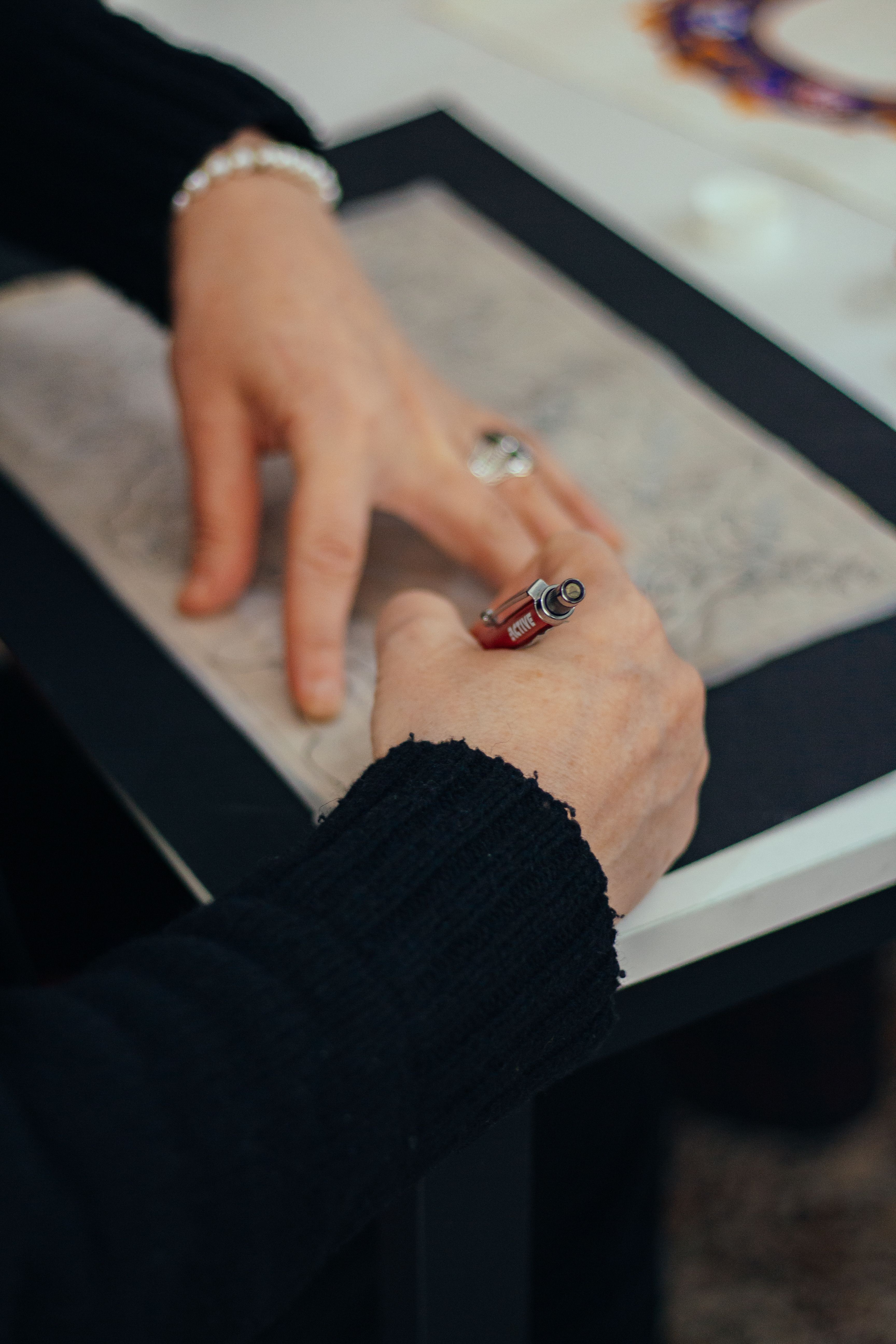
PLATE 01 · b — Reference photograph: hands sketching on paper with a mechanical pencil. Shape and diameter are drawn before any pigment is mixed.
CONSULTATION
The private consultation
Bring your questions written down if that helps — about sensation, about the number of appointments you may want, about how the area has healed so far. There is no expectation that you book on the day.
Preparing in general terms
Arrive rested and well hydrated, with the skin of the area unirritated — no recent sunburn, peeling or active treatment on the site. Wear a loose top that opens at the front. Continue any medication as directed by your own clinician; we do not advise on medical matters. Specific preparation notes are given to you before your appointment.
01
Stencil and symmetry
The mapped shape is transferred as a stencil, then checked upright and reclined until you and the artist agree on the position and diameter.
02
Colour confirmed
Pigments chosen at consultation are mixed and re-compared against your skin on the day, since light and skin condition both change.
03
Pigment applied
Colour is built in light passes, working from the softest tone outward so the edge stays diffuse. You can pause at any point.
04
Settling and review
The area is dressed, aftercare is explained in person, and a review once healing has settled is discussed rather than assumed.
HEALING
Healing and aftercare
Freshly placed pigment usually looks deeper and more defined than it will once healed; colour typically softens as the skin settles over the following weeks. Light flaking, tightness or minor colour loss during that window is commonly part of the process rather than a sign that something has gone wrong. How quickly any individual heals varies, particularly on skin that has been through surgery.
QUESTIONS
Frequently asked
What does it feel like?
Sensation differs from person to person, and skin that has had surgery often responds differently again. Comfort is discussed openly at consultation, and the appointment is paced around you.
How private is the appointment?
Consultations and treatments take place privately, only what needs to be uncovered is uncovered, and any photographs are taken with your agreement. Enquiries are handled confidentially.
When can I be tattooed after surgery?
Will the two sides match?
Symmetry is mapped and checked carefully in more than one position, and where one side remains it is used as the reference for shape and tone. Skin heals individually, so a specific result is not predicted.
How long does the colour last?
Is more than one appointment usual?
A review once healing has settled is often discussed, since colour reads differently after the skin recovers. Whether anything further is worth doing is decided together at that point.
Can I see examples first?
RELATED TREATMENTS
Ask your questions first. Decide afterwards.
Consultation enquiries are read privately by the studio and are not shared. Write as much or as little as you wish — a single line is enough to begin.