PRIVATE PARAMEDICAL PRACTICE
Confidential enquiries
Plate i
Home / Services
Ten treatments across areola restoration and paramedical work
Areola restoration, refinement of earlier work, and wider paramedical camouflage. Each page below explains what the treatment involves, who it may suit, and how consultation, healing and aftercare are handled.
Plate ii

Reference photograph: measured drawing precedes any pigment work. Shape and symmetry are drafted on paper and on skin before an appointment is planned.
Discipline
What separates restorative work from decorative tattooing
Restorative and paramedical tattooing begins away from the machine. Symmetry is mapped with a skin-safe marker, shape is drawn and redrawn, placement is measured against the body as it is now, and colour is designed against your own skin in daylight rather than picked from a chart.
Decorative tattooing sets out to add an image. This work sets out to rebuild an appearance that reads as unremarkable — soft edges, believable depth, a tone that settles quietly. Every treatment listed here follows the same order: consultation first, design and mapping second, pigment last.
Suitability is considered individually at consultation, taking account of skin condition, scarring, surgical history and the advice of your own treating team. No outcome is predicted in advance, and healed colour varies from person to person.
Treatments 01–05
Areola restoration
Treatments concerned with rebuilding the appearance of areola shape, tone and depth after surgery — from the foundation technique through to reconstruction-specific work.
01
Pigment used to design or redefine areola shape, tone and edge — the foundation treatment the rest of this page builds on. Read the service page
02
Light and shadow shaded to suggest projection on a flat chest wall, without altering the tissue itself. Read the service page
03
Restoring the appearance of nipple and areola where tissue has been removed or altered, with placement designed together at consultation. Read the service page
04
For people after mastectomy: readiness, skin condition and timing are talked through carefully before any design work begins. Read the service page
05
Tattooing after reconstructive surgery, where reconstructed tissue and surgical scarring shape how colour, edges and placement are approached. Read the service page
Treatments 06–10
Refinement and maintenance
06
Adjusting tone, warmth or unevenness in existing areola pigment, assessed against your skin in daylight at consultation. Read the service page
07
Softening how scarring in and around the areola reads to the eye — related to, but distinct from, full restoration. Read the service page
08
Revisiting earlier areola work as pigment softens, with the original design reviewed before anything further is added. Read the service page
Wider paramedical work
09
The restorative discipline areola work belongs to: corrective pigment placed on altered or scarred skin, planned before it is applied. Read the service page
10
Camouflage tattooing for scars beyond the areola area, including patch testing and suitability considered case by case. Read the service page
Unsure which page applies to your situation? The frequently asked questions cover process, comfort and privacy, and a private consultation is the proper place to work it out.
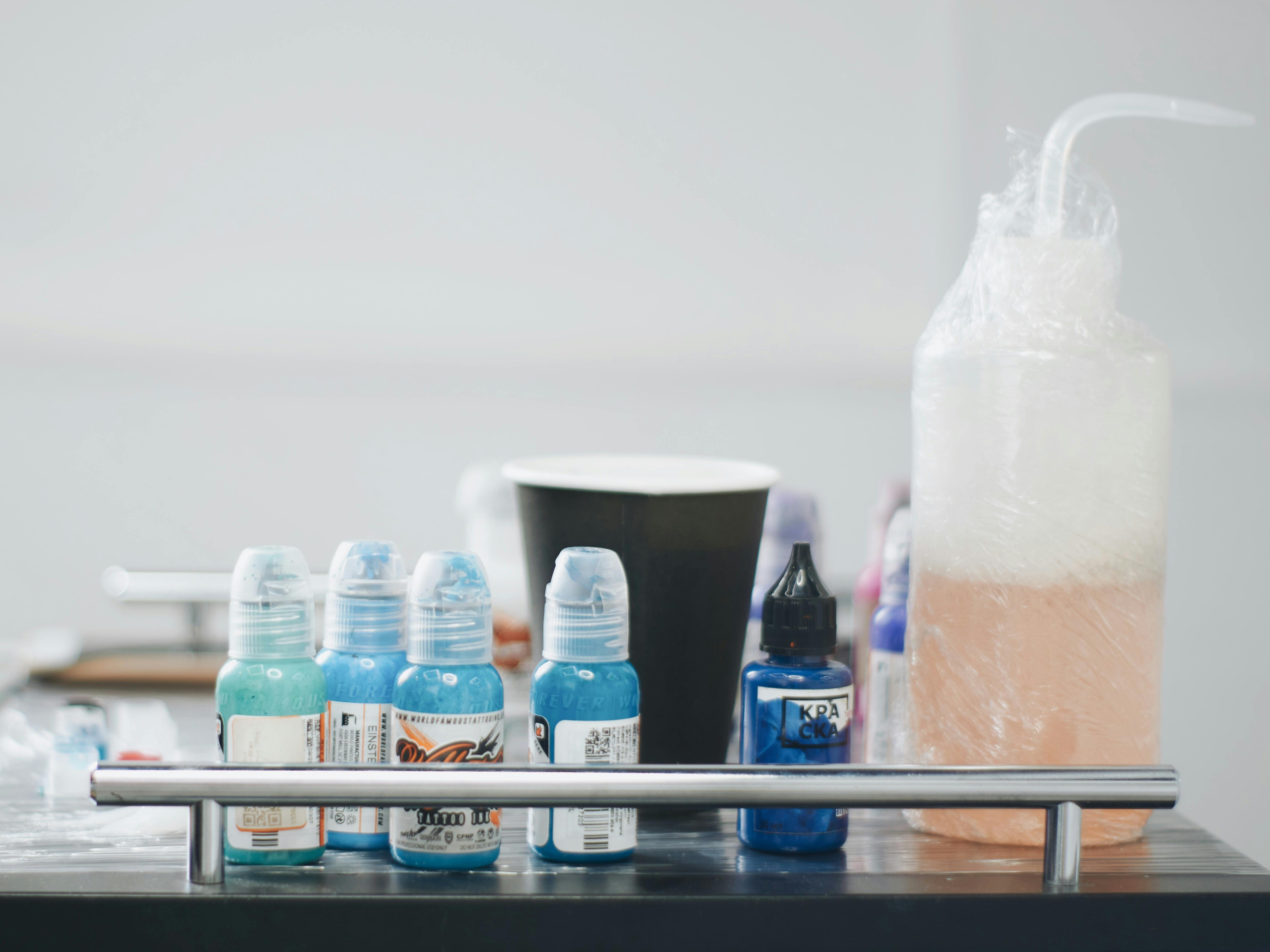
Reference photograph: sealed pigment bottles and a clean tray rail at a prepared workstation. Tone is mixed from a small number of pigments and compared against your own skin in daylight.
Colour & shape
Tone and shape are decided with you, not for you
Colour is built from a small number of pigments mixed and compared against your own skin, in natural light, with your preference for something quieter or warmer taken seriously. Shape is drawn on tracing paper and on the skin, checked from standing and seated positions, and adjusted until it sits right to you before the stencil is set.
What healed colour looks like depends on individual skin, scarring and how each person heals, so nothing is guaranteed in advance and a settling period is expected. The guides on areola colour selection and areola tattoo healing explain this in more detail, and colour correction covers work on existing pigment.
Suitability
Assessed one person at a time
Whether a treatment is appropriate depends on your skin and scar tissue as they are now, on how healing has progressed since any surgery, and on the guidance of the clinicians already caring for you. That assessment happens in conversation at consultation — not from a photograph, and not from a page like this one.
Some people arrive certain of the service they want; many arrive with questions and no decision made. Both are welcome. A consultation can end with a plan, a further review later in the year, or simply clearer information to think about at home.
Before & After explains why healed work is reviewed privately with you at consultation rather than published on this site. The studio’s approach explains how appointments are kept private, and visiting the studio covers what to expect on the day.
Reading
Guides that explain the treatments
What Is 3D Areola Tattooing?
How shading alone creates an impression of depth on flat skin.
Areola Tattoo After Mastectomy
Timing, readiness and the questions worth asking before a first consultation.
Areola Tattoo Healing
What the healing window generally involves and why aftercare advice is individual.
How Long Does an Areola Tattoo Last?
Why pigment softens over time and which factors influence that pace.
Areola Colour Selection
How tone is mixed, compared and agreed with you during consultation.
Areola Tattoo After Reconstruction
What changes when tattooing follows reconstructive surgery and established scarring.
When to Consider an Areola Tattoo Refresh
Signs that earlier work may benefit from a review appointment.
Scar Camouflage Explained
What camouflage tattooing can address, and what it cannot.
Consultation
Every treatment on this page begins with one quiet conversation.
Send a confidential enquiry and we will follow up by your preferred contact method. Enquiries are handled privately by the studio and are not shared for marketing.