PRIVATE PARAMEDICAL PRACTICE
Confidential enquiries
PLATE 05
In this series
02 — 3D Areola Tattoo
03 — Nipple & Areola Restoration
04 — Post-Mastectomy Areola Tattoo
05 — Breast Reconstruction Tattooing
Breast reconstruction tattooing, mapped to the chest as it is now.
Tattooing that follows reconstructive surgery is planned around what the surgery has left: moved or grafted skin, altered texture, and scar lines that cross the area where colour will sit. Placement is drawn and reviewed before any pigment is chosen.
OVERVIEW
What the treatment involves
Breast reconstruction tattooing uses cosmetic pigment to rebuild the appearance of areola colour, shape and definition on tissue that has already been reconstructed. It is a surface treatment. Nothing is added or removed; what changes is how the area reads to the eye once colour and shading are in place.
Reconstructed skin does not always hold pigment the way undisturbed skin does. Grafted areas, flap tissue and mature scar lines can differ from the skin beside them in texture, elasticity and underlying tone, so colour can settle unevenly across a single areola shape. Where the skin varies in this way, a patch test or a staged approach may be discussed at consultation: a small amount of colour placed, allowed to heal, and reviewed before the full design is committed to.
Because skin responds individually, no result is predicted in advance. What is described at consultation is the plan — the shape, the placement, the tone being worked toward — and the likelihood that a second session after healing will refine it.
WHO IT MAY SUIT
Who reconstruction tattooing may suit
This treatment is often considered by people who have completed implant-based or flap reconstruction and whose surgical team has confirmed the area is fully healed and settled. Timing is a question for that team rather than for a tattoo studio, and it is worth raising with them before an appointment is arranged.
It may also suit those who would like the appearance of areola colour and definition returned without further surgery, whether reconstruction was recent or some years ago. Some people come with one side reconstructed and want the work matched to the other; others have had both sides reconstructed and are designing shape and tone from the beginning.
And it may suit people who already have tattoo work over a reconstruction that has softened or shifted in tone with time. Depending on what is there, that conversation may lead toward an Areola Tattoo Refresh or Areola Colour Correction rather than a full new design.
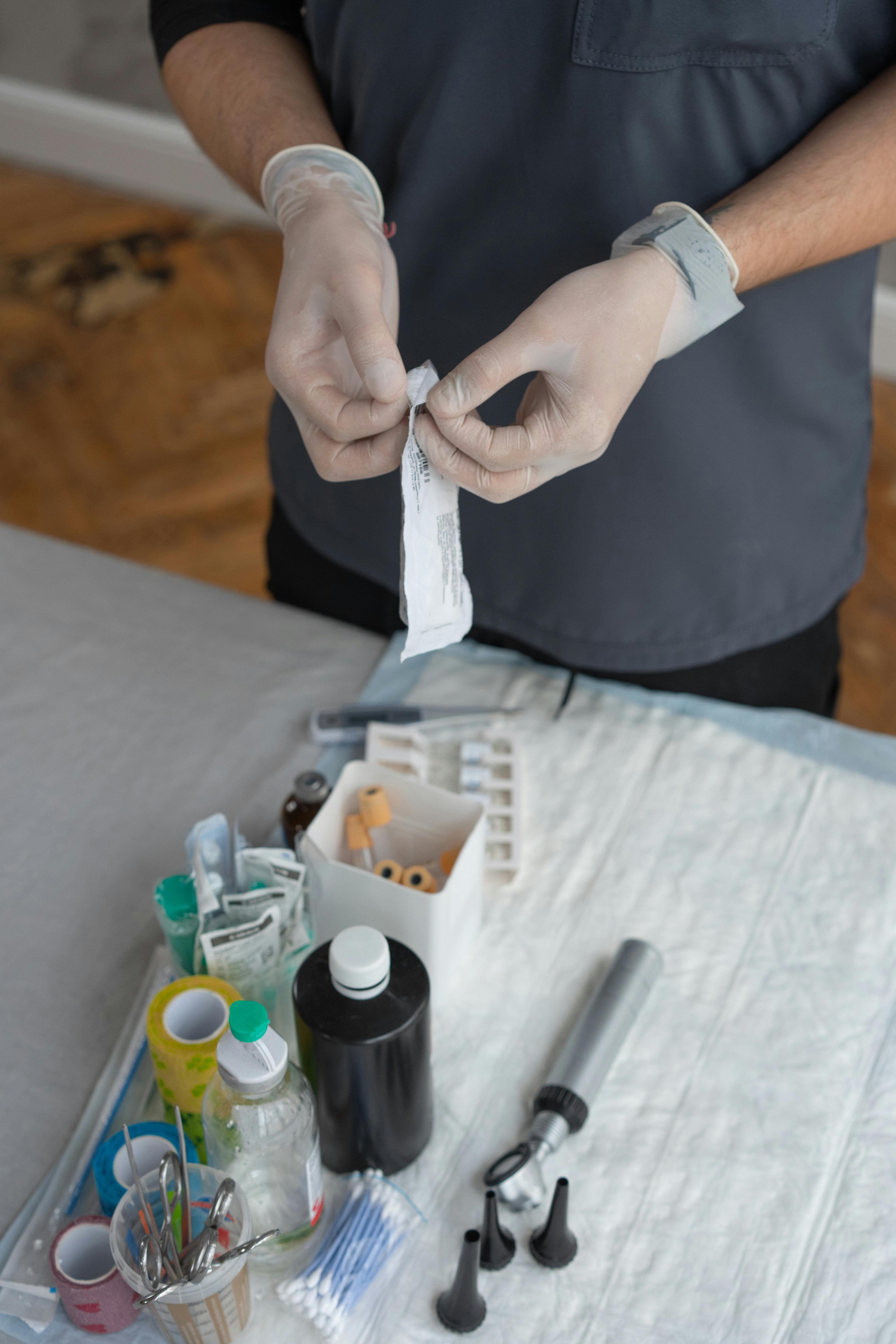
Reference photograph: a gloved practitioner opening a sterile pack over a prepared treatment table. Plate 05 · ii — the surface is set out and checked before any shape is drawn on skin.
SEQUENCE
From consultation to review
01
Consultation and assessment
A private, unhurried conversation. The reconstructed area is looked at in good light — skin tone, surface texture, where scar lines fall — and what you would like the result to do is discussed in plain terms. If the skin varies noticeably across the area, a patch test or a staged approach is raised here rather than later.
02
Design and mapping
Placement is drawn against the chest with a skin-safe marker and reviewed both standing and seated, because reconstructed tissue can sit differently in each position and a shape that reads as centred lying down may not read that way upright. Diameter and symmetry are judged by measurement as well as by eye, and tone is built from swatches held against the surrounding skin in daylight.
03
Preparation
Straightforward guidance is given before the appointment: clothing that opens at the front, a normal meal beforehand, and skin that is settled, unirritated and free of sunburn on the day. Anything concerning medication, surgical timing or clearance to proceed belongs with your treating team.
04
The appointment
The area is cleaned, the agreed stencil applied, and the design checked with you once more before work begins. Colour is built gradually rather than laid in at full strength, with pauses to view the area upright in a mirror. Immediately afterwards the pigment looks warmer and stronger than it will once healed.
05
Healing and review
The surface settles over the following days and the tone continues to soften for some weeks after that. A review is arranged once healing has finished, to see how the colour has held across the different areas of skin and to discuss whether a second pass would refine the shape or depth.
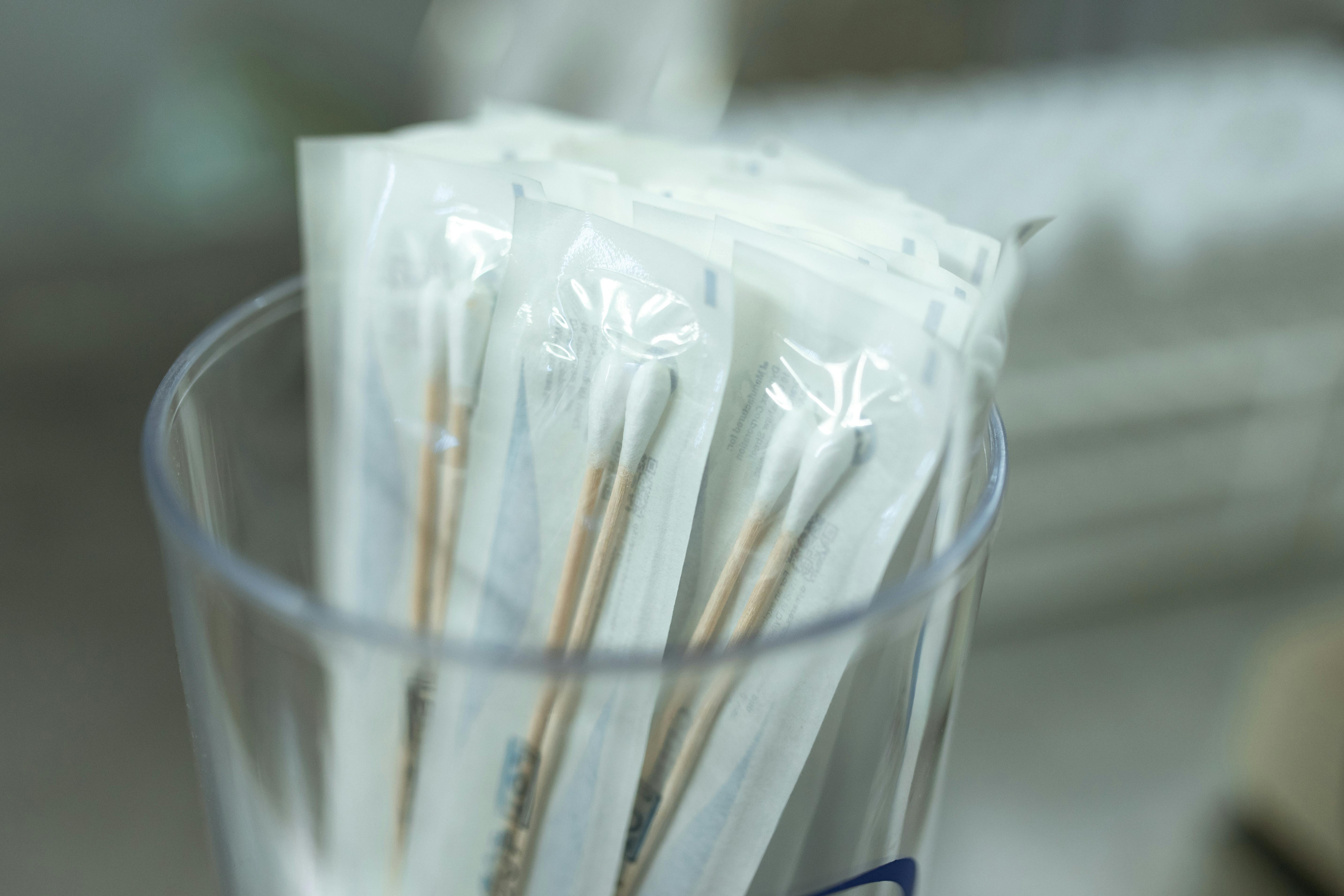
Reference photograph: individually packaged cotton swabs in a clear container in a clinical setting. Plate 05 · iii — the plain, sterile materials the healing weeks rely on.
HEALING & AFTERCARE
How the area settles afterwards
Written aftercare is given at the appointment and takes precedence over anything read beforehand, since it is written for your skin and the area worked on. In general terms, the area is kept clean and dry, soaking and swimming are set aside while the surface is healing, and direct sun on fresh work is avoided.
Over reconstructed or grafted skin, pigment can settle a little unevenly as it heals — holding firmly in one part of the shape and lifting in another. Where that happens, a follow-up pass is a normal part of building the work rather than a correction. The general pattern of healing is set out in the guide Areola Tattoo Healing.
QUESTIONS
Asked at consultation
Can pigment be placed over scar tissue?
Often it can, once scars are mature and fully healed. Scar tissue behaves differently from the skin around it: it may be firmer, smoother or paler, and it can hold colour to a different degree. That is assessed in person rather than assumed, and it is one of the main reasons a patch test may be suggested before the full design.
Does it matter whether reconstruction was flap or implant based?
In general terms it changes what the skin surface is like. Flap reconstruction may bring tissue from elsewhere on the body, carrying its own tone and texture into the area. Implant-based reconstruction may leave thinner skin with scar lines running across it. Both are worked with, and the approach is decided from the skin in front of us at consultation rather than from the name of the procedure alone.
Are follow-up sessions usual?
A further session after healing is commonly discussed for this kind of work, particularly where the skin varies across the area. It is planned as part of the process, not as a sign that something has gone wrong, and what it involves is explained before any work begins.
Talk through a staged patch test before any full design is agreed.
Enquiries about reconstruction tattooing are handled confidentially, and nothing is decided in the first conversation. You are welcome to ask about the mapping stage, patch testing, or simply whether this is the right point to begin.