BEFORE & AFTER

Why nothing is published here

Reading a photograph fairly

Seeing relevant work at consultation

Which treatment page to read

Home  /  Before & After

Before and after: reviewed privately with you, not published on this page.

There is no public gallery of client results on this site. This page explains why healed work stays within the studio, how relevant examples are looked at with you at consultation instead, and what changes the way any before-and-after photograph reads.
CONSENT

Client photographs are not published on this page

Healed results from this studio are not shown here. Approved work stays within the practice and is looked at privately, with you, at consultation — on a screen, in a closed room, and only if you want to see it. Nothing on this page is a client result.
That is a deliberate position rather than an omission. Publishing an areola result means asking someone to release a photograph of their own body to an open web page, and permission asked in that setting is easily felt as an obligation. If an image is ever published here, it will follow written permission given after healing, separately from the appointment, and it will be removable at any time through the consultation form.
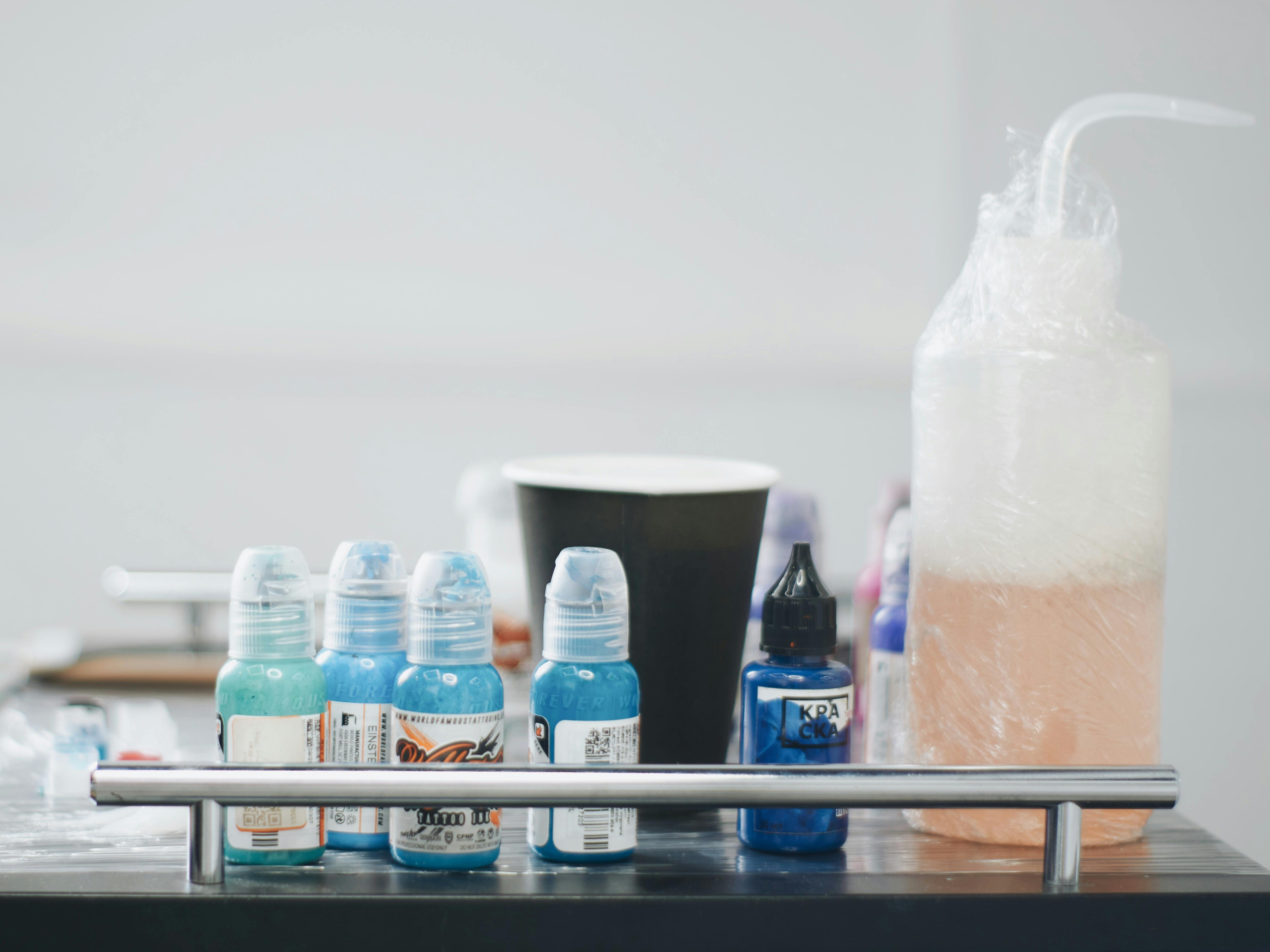
The photographs on this page are reference frames — drawing, pigment and preparation in the studio — and each is captioned as such. A healed result belongs to one person’s skin, one surgical history and one design drawn for that person alone. It records what was done in that room, on that day. It is not a forecast, and shape, tone and healing are planned individually at consultation for each service.
READING A PLATE

Four things that change how a photograph looks

01

Light

Daylight, lamplight and a phone flash each read pigment differently. Where possible, the before and the after are taken in the same position under the same light, because a change in the room can look like a change in the skin.
02

Healing stage

Fresh pigment sits darker and sharper than settled pigment. An image taken at the end of an appointment is a different photograph to one taken after the skin has recovered, which is why healed frames are the ones published.
03

Skin tone

Pigment is always read against the skin surrounding it. The same mix behaves differently on different undertones, so a colour that suits one person is a starting reference rather than a recipe.
04

Scar and surface

Reconstructed tissue, grafts and settled scarring hold colour in their own way. Two results that look similar on screen may have begun from very different surfaces, and that is where the design work sits.
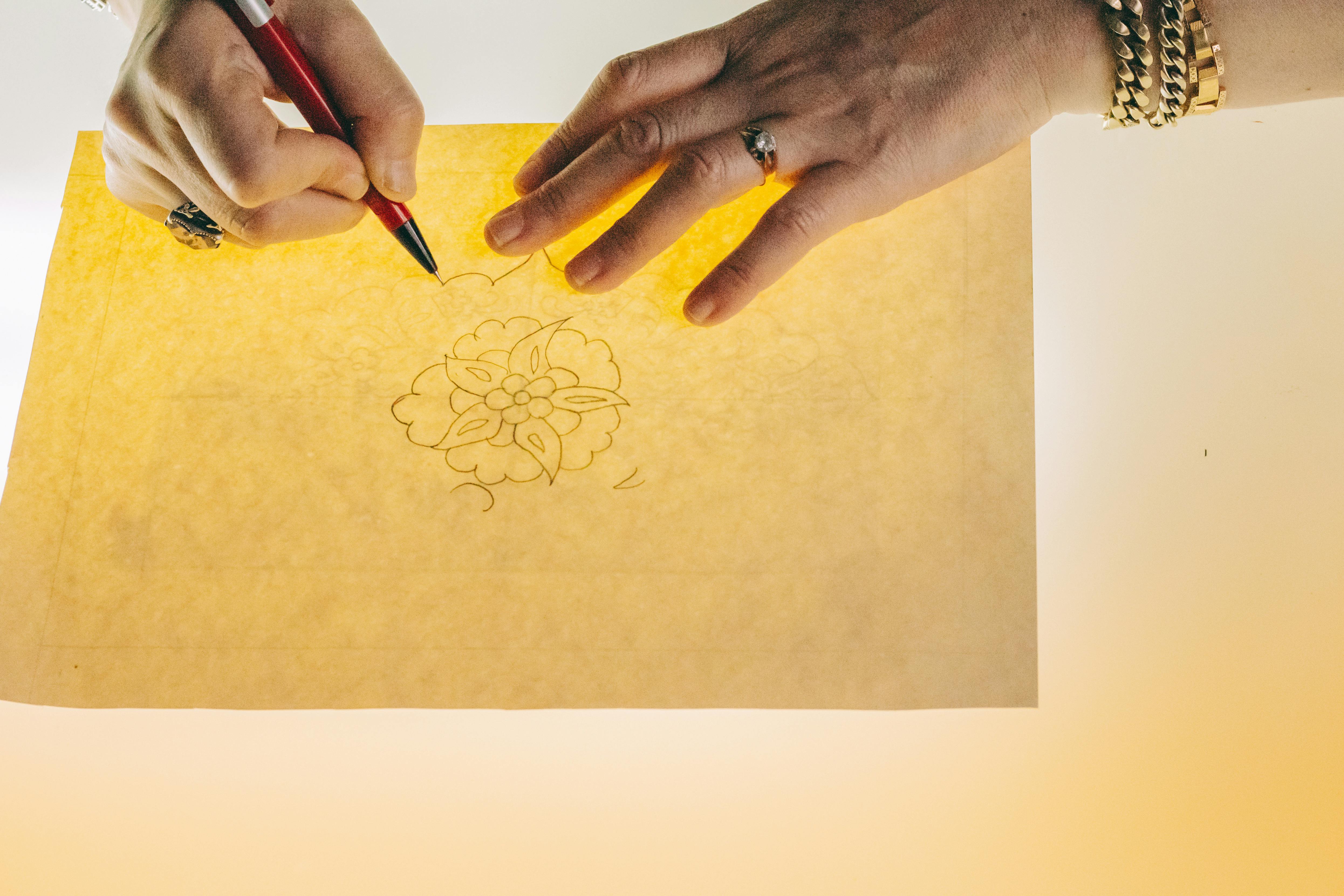
Overhead view of hands sketching a symmetrical floral design in red pen on aged paper, with jewelry visible on the hands.
Reference photograph: a design worked out by hand on paper before anything is transferred. Studio reference, not a client result.
IN THE ROOM

Examples are looked at privately, and chosen to match your situation

Because nothing is published here, everything relevant is looked at in person. At consultation, healed work that matches your situation is reviewed with you on a screen in a closed room, at your pace, and only if you want to see it — some people prefer to talk through shape and tone without photographs at all.
What is shown is narrowed to the work being discussed. Post-mastectomy tattooing on flat reconstructed skin reads very differently to a colour correction over existing pigment, and comparing the two rarely helps. Questions about how a healed result settles are covered in the healing guide.
TREATMENTS

Where to go next: the ten treatments offered here

Each treatment has its own page setting out what it involves, who it may suit and how the consultation runs. If you came looking for results, this index is the more useful route: read the page that matches your situation, then ask to see relevant work in person.
01 — 10
The full set, and how the treatments differ, sits on the services hub.

01   Areola Tattooing

Shape, symmetry and tone designed for one person and applied in stages.

02   3D Areola Tattoo

Shading built from light and shadow to suggest dimension on flat skin.

03   Nipple & Areola Restoration

Restoring the appearance of colour and placement where tissue has changed.

04   Post-Mastectomy Areola Tattoo

Readiness, skin condition and placement considered before any design begins.

05   Breast Reconstruction Tattooing

How reconstructed tissue and surgical scars shape the approach taken.

06   Areola Colour Correction

Warmth, coolness and unevenness in existing pigment, adjusted gradually.

07   Areola Scar Camouflage

Tonal work that softens contrast around settled scarring near the areola.

08   Areola Tattoo Refresh

Reading earlier work first, then re-applying colour only where tone has lifted.

09   Paramedical Tattooing

The wider restorative discipline that areola work belongs to.

10   Scar Camouflage

Camouflage tattooing for scars elsewhere on the body, assessed individually.

Ask to see the work that relates to your own situation.

Enquiries are read only by the studio and handled confidentially. The form carries your message and contact details; photographs are not attached to it. Anything you would like looked at can be brought to the consultation, or shared privately by arrangement once the studio has replied.
Prefer to read further first? The guides and resources and the frequently asked questions cover process, comfort and timing.