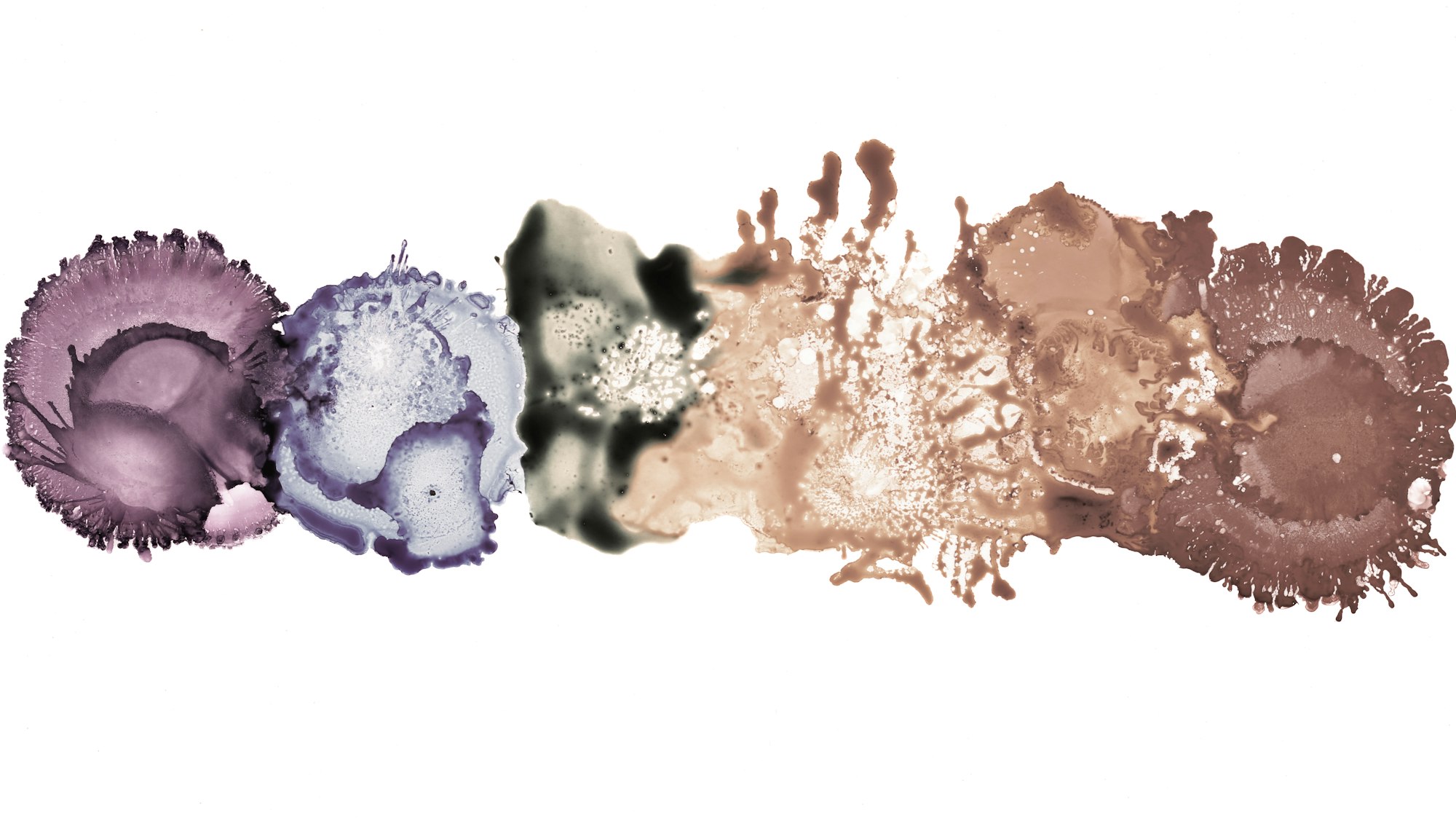
REFERENCE · MUTED PIGMENT SWATCHES, SIDE BY SIDE
THE SHORT VERSION
01Natural areolas contain subtle variations in tone, not one even colour.
02One shade applied evenly tends to read as a flat disc on the skin.
03Careful colour selection, layering and realistic shading build a more natural-looking result.
04Skin condition, surgical history, scarring and healing all influence how pigment settles.
05Colour matching starts at a personalised consultation.
SKIN · LIGHT · TONE
A common misconception about areola tattooing is that the work comes down to choosing the right colour. It is an understandable idea. When you look at an areola from a distance, it seems to be one tone. Look closer and it is rarely so simple.
Natural areolas hold subtle variations in tone. Colour can shift between the centre and the outer edge, texture catches light differently in different places, and the boundary with the surrounding skin is usually soft rather than sharp. The eye reads all of these small changes together, and that is what makes skin look like skin.
When a single pigment is laid down evenly, those cues are missing. The result can look like a printed circle: one flat tone with a hard outline. Even a well-matched shade can look less natural when it has no variation within it.
“One tone is rarely just one colour.”
This is why 3D nipple and areola tattooing relies on several decisions working together rather than one swatch. It applies to 3D nipple tattooing on flat skin as much as to areola pigmentation and colour correction after a reduction or lift.
MATERIAL GUIDE
01
Pigments are chosen with your own skin tone in mind, and often the other side as a reference, so the colours relate to you rather than to a chart.
02
Rather than one dense application, colour is built gradually in layers, which allows variation within the areola and a softer transition at the edge.
03
Light and shadow create the appearance of depth and texture. It is a visual effect only: tattooing does not create physical nipple projection.
AFTER TREATMENT
Layered colour is planned, but it is not fixed the moment it is applied. Every person’s skin heals in its own way, and skin that has been through surgery or scarring can take up pigment differently from untouched skin.
Healed colour can look softer than it does on the day, and pigment retention differs from one client to another. Over time, tattooed colour can also change. That is why we talk about natural-looking results rather than a set outcome, and why suitability and results vary with skin condition, surgical history, scarring, pigmentation and individual healing.
This work is cosmetic and restorative pigment application. It is not a substitute for medical advice or surgical treatment, and medical clearance may be needed first. You can read more on suitability, limitations and risks.
CONTINUE READING
Can a Nipple Tattoo Look Realistic Without a Reconstructed Nipple?
If you would like to talk through colour for your own skin, we welcome enquiries to our Forest Hill studio, including from clients willing to travel.