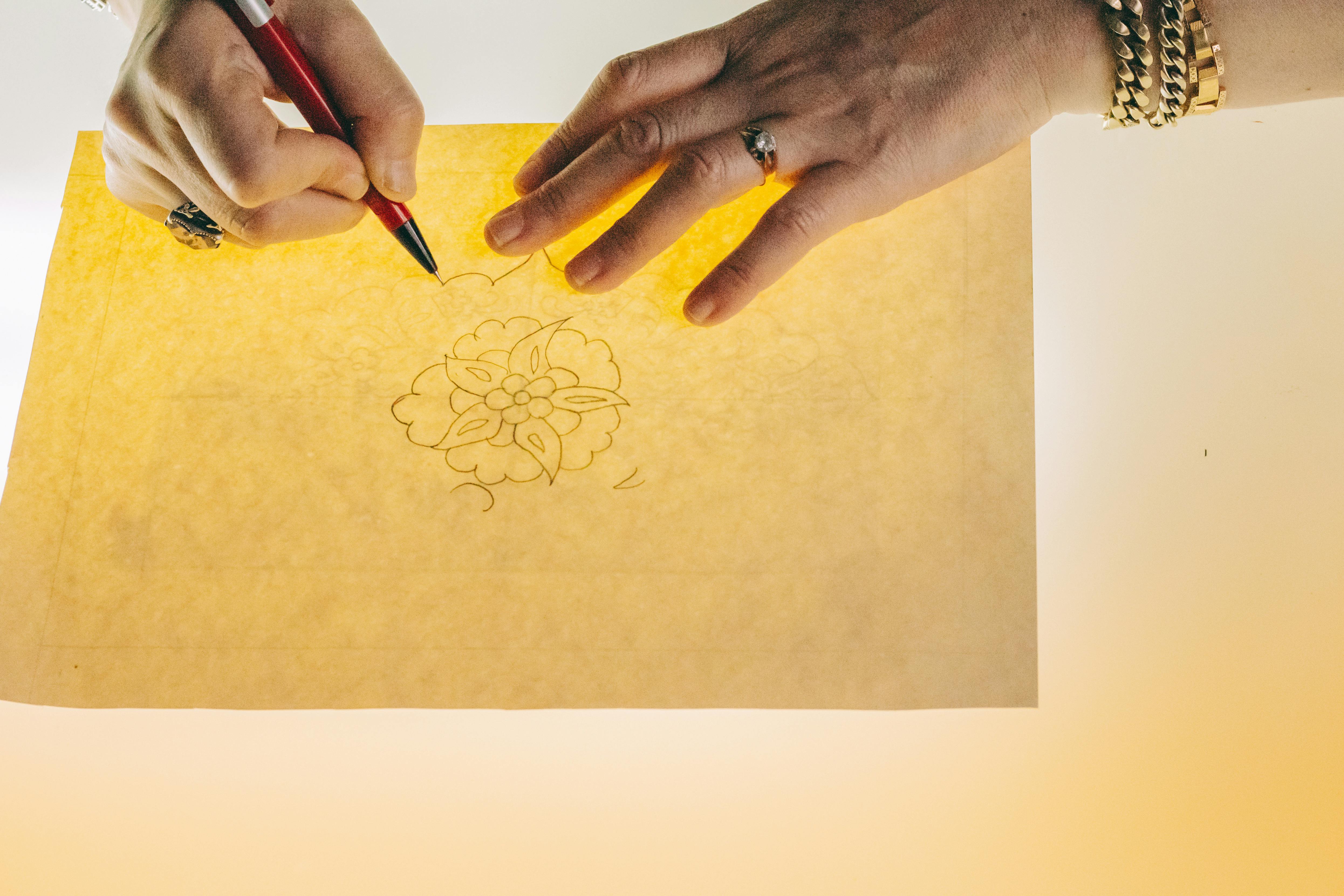
Overhead view of hands sketching a symmetrical floral design in red pen on aged paper, with jewelry visible on the hands.
Reference photograph: a line worked out slowly by hand. A refresh is a drawing decision before it is a pigment one — what has softened is looked at first, then re-designed.
READING  ·  REFRESH
Home  /  Resources & Guides  /  When to Consider an Areola Tattoo Refresh

When to consider an areola tattoo refresh.

Areola pigment is placed lightly in the upper layers of the skin, so it softens over years rather than staying fixed. This guide sets out the changes people tend to notice first, and what a refresh appointment actually reviews.
A REVIEW FIRST

A refresh starts as a review, not a redo.

The appointment begins the way the first one did — by looking, in daylight, at how the healed work sits on your skin now. Some people arrive expecting a complete re-tattoo and leave with one light pass across a single side. Others find the shape still reads well and only the warmth has drifted. The review decides which it is, and that decision is reached with you rather than presented to you.
Small design adjustments can be discussed at the same time: a softer outer edge, a marginally smaller diameter, a change of balance where surgery has altered the tissue around the tattoo. Work tattooed at another studio is welcome for review — bring what you know about when it was done and how it healed, and it is assessed on its own terms.
FOUR OBSERVATIONS

Four changes that commonly prompt the question.

None of these mean something has gone wrong. Pigment held in living skin is expected to move, and each of these is simply a sign the work has entered a later stage of its life. Below, each observation is set beside what it usually points to at a review.
WHAT CHANGES

Contrast quietensThe boundary reads less distinctly than it did once healed.

Warmth or coolness shiftsA cooler grey, or a warmer note, than you remember.

Uneven fading over scar tissueOne area lightens while the rest holds its density.

Shape no longer matchesThe outline sits differently against the tissue around it.

WHAT IT USUALLY MEANS

Depth of tone rather than the drawing. The shape is often entirely intact, so a review may end with one light pass across a single side instead of anything resembling a re-tattoo.

Pigment breaking down gradually, not incorrectly. The drift is slow, and is often seen in a photograph before it is seen in the mirror; tone is then re-read against your skin as it is today.

Scarred and grafted skin holding pigment differently from the skin beside it. Uneven loss is common, and is usually looked at locally — that area on its own terms — rather than as a whole.

A design question rather than a colour one. Revision surgery or a second reconstruction can move the tissue around the tattoo, so placement is measured and mapped again before anything is decided.

WHAT IS ASSESSED

What the refresh appointment looks at.

Healed tone in daylight. Colour is judged against your skin as it is today, and mixed from that reading rather than from the swatch chosen at the original appointment.

Symmetry and placement. Both sides are measured and mapped again, because the reference points on the chest may have changed since the work was first drawn.

Condition of the skin. Scar tissue, grafts and areas that have thinned are considered for how they are likely to accept pigment now, which may differ from last time.

If tone rather than density turns out to be the issue, the conversation may move towards areola colour correction instead.
Close-up of hands drawing with a yellow pencil and ruler on white paper at a wooden table, with colored pens and scissors nearby.
Reference photograph: measuring before marking. Both sides are mapped again at a refresh, because the reference points on the chest may have changed since the work was first drawn.
HONEST SCOPE

Renewing pigment, not resetting skin.

A refresh replaces pigment that has softened. It works with the skin you have now — including scar tissue, grafts and any thinning from earlier work — and that skin carries its own history. Density can be rebuilt, tone can be re-matched and edges can be re-drawn; the texture underneath stays as it is, and planning is more useful when that is said plainly at the start.
For that reason refresh work is usually planned conservatively: a lighter pass first, a review once the area has settled, and a second pass only if the healed result asks for one. Building tone gradually is gentler on the skin than placing too much at once. If you are weighing up timing, the companion guide on how long an areola tattoo lasts covers what influences fading in the first place.

If the work has quietened, a review is the sensible place to start.

Send a confidential note describing the work you have and what you have noticed about it. Enquiries to Areola Tattoo Studio are read privately. If images would help, we will arrange a private way to look at them after we reply.