PRIVATE PARAMEDICAL PRACTICE
Confidential enquiries
— What camouflage tattooing addresses
— Suitability, read scar by scar
— Why a patch test is discussed
— Preparation and the staged appointment
— Healing, sun care and review
— Related services and reading
Scar camouflage: softening the contrast between a scar and the skin around it.
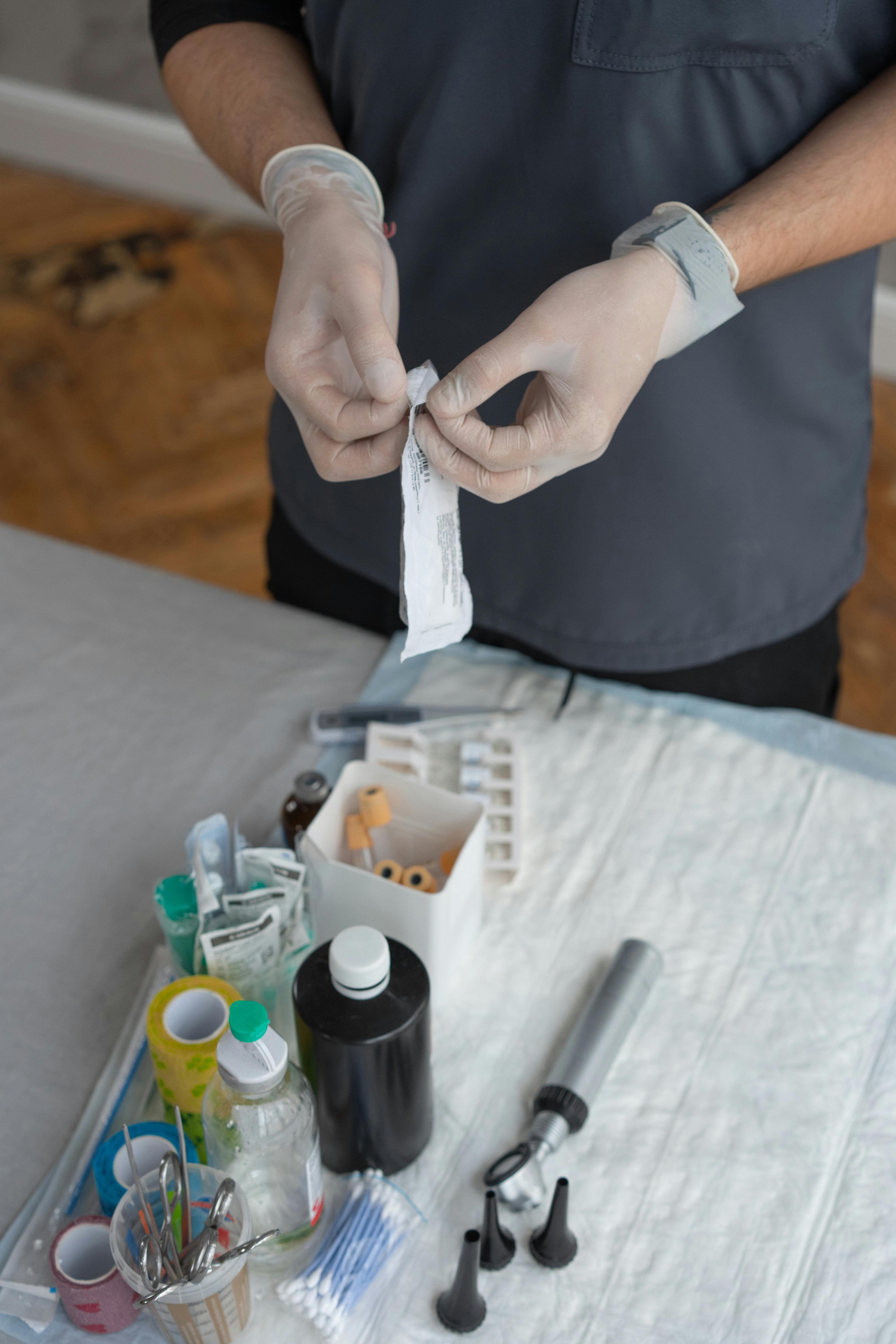
What camouflage tattooing addresses — and what it leaves alone.
Scar tissue often settles paler, cooler or flatter in colour than the skin it sits within. Camouflage work places softly blended pigment into that tissue to narrow the difference, so the eye passes over the area more easily in ordinary daylight rather than stopping at a line.
It is a change of tone only. Raised, indented, tight or rippled tissue keeps its surface after pigment work — texture is not treated here. Scarred skin also holds pigment differently from unmarked skin, and it can hold it unevenly across a single scar. How much it retains is read through healing rather than predicted at a first appointment, which is why the work is approached in stages and why results differ from one person to another, and sometimes between two scars on the same person.
Where the scarring sits in or around the areola, that work is covered separately on Areola Scar Camouflage. Camouflage belongs to the wider field described on Paramedical Tattooing.
Who it may suit, and what is looked at first.
Camouflage tattooing is usually considered for scarring that has fully settled and is no longer changing in colour or size — for example after surgery, injury or a healed graft — where the difference in tone is what the person notices most.
At consultation the scar is looked at in daylight and discussed against several factors:
i Age and maturity — whether the tissue has stopped changing.
ii Colour — how far the scar sits from the skin around it, and in which direction.
iii Skin — its tone, how it responds to sun, and how it has healed before.
iv Prior treatment — surgery, laser or other work carried out on the area.
v Position — where the scar sits and how much the area moves or is exposed.
If a scar is recent, still changing, or under the care of a treating practitioner, we ask that you speak with them before booking. We do not assess or advise on medical matters, and some scars are better left as they are.
A patch test, then staged work.
Consultation
Patch test
Preparation
The appointment
Review
The days after the appointment.
Freshly worked pigment usually looks darker and warmer than the settled result, and the surrounding skin may be pink for a short while. As the surface heals the colour lifts and softens, and what remains is only clear once that process has finished.
Written aftercare is given to you at the appointment and takes precedence over anything read here. In general terms it covers keeping the area clean and dry, leaving any flaking alone, and avoiding soaking, swimming, heavy sweating and friction over clothing while the skin closes. The general healing pattern is set out in the guide Areola Tattoo Healing.
Sun, time and the settled result.
Ultraviolet light acts on two things at once here: the pigment placed in the scar, and the scar tissue itself, which often responds to sun differently from the skin beside it. Once healed, covering the area or keeping high sun protection on it is the single most useful habit for holding the match you have worked towards.
Pigment in skin softens gradually over the years. If the tone lifts and the contrast starts to return, the area can be looked at again rather than left — the same principle described on Areola Tattoo Refresh for restorative work.